Introduction
For many Malaysian industries, electricity is no longer just another line on the monthly expenses sheet. It is a critical operating cost that directly affects production, profitability and long-term competitiveness. At Suria & Sonne, we work with businesses facing exactly this pressure every day.
Factories run machinery, warehouses operate lighting and ventilation systems, and commercial buildings depend on air-conditioning, lifts and pumps every single day. As electricity consumption continues to form a significant part of operating expenditure, more Malaysian businesses are looking towards renewable energy, particularly solar farm installations and industrial rooftop solar, as a way to manage costs while moving towards a lower-carbon future. For an industrial business, this can be a strategic investment in energy security, cost management and sustainability, not just an environmental initiative.
TL;DR: Key Takeaways
A solar farm, whether ground-mounted or built across an industrial rooftop, is becoming a strategic investment for Malaysian industries facing rising electricity costs. Factories and warehouses that consume electricity heavily during the day can offset a substantial share of that demand with on-site solar generation.
- Non-domestic Solar ATAP capacity can reach 100% of maximum demand, capped at 1MW.
- Unused industrial rooftops can become productive energy-generating assets at no extra land cost.
- PPA and leasing models can remove the need for upfront capital entirely.
- Not every industry suits solar; the site and load profile determine the fit.
What Is a Solar Farm?
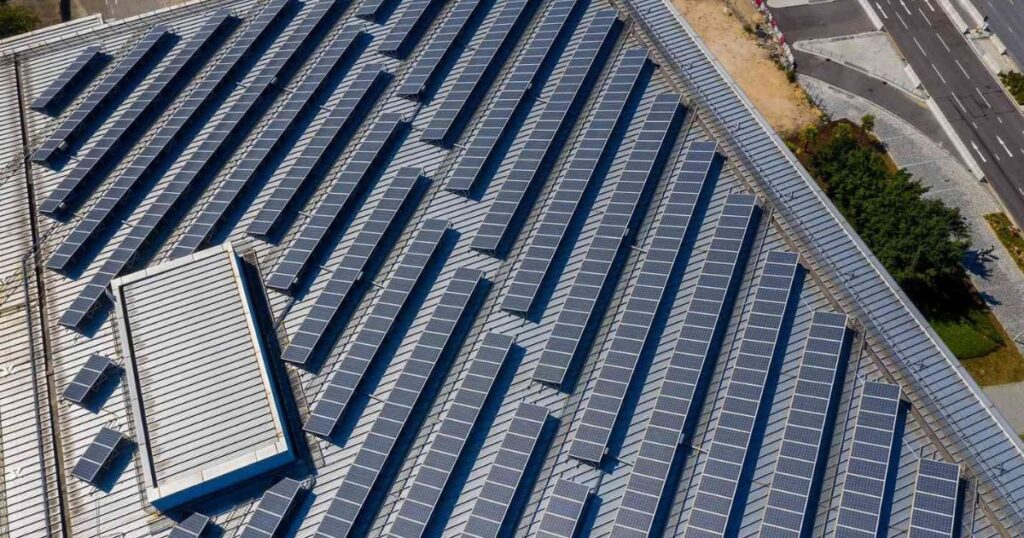
A solar farm is a large-scale installation of multiple solar PV panels designed to generate electricity from sunlight, traditionally associated with large plots of land, though the same principle applies to industrial rooftops, warehouses, commercial buildings and car parks. Under Solar ATAP, non-domestic consumers can install systems of up to 100% of maximum demand, capped at 1MW.
Table 1: How a ground-mounted solar farm compares to industrial rooftop solar.
| Ground-Mounted Solar Farm | Industrial Rooftop Solar | |
| Location | Dedicated land, often hundreds of acres | Existing factory, warehouse or commercial roof |
| Typical scale | Tens to hundreds of megawatts | Up to 1MW under Solar ATAP for non-domestic users |
| Land cost | Requires dedicated land acquisition | Uses space the business already owns or leases |
| Best suited for | Utility-scale generation and grid supply | Businesses offsetting their own electricity use |
This is particularly attractive in Malaysia because the country receives abundant sunlight throughout the year, and instead of leaving large industrial rooftops unused, businesses can transform them into productive energy-generating assets.
You can view Suria & Sonne’s completed solar projects for examples of different solar PV applications.
Why Are Malaysian Industries Turning Towards Solar?
Malaysian industries are turning towards solar because electricity is a major operational expense that industrial facilities consume throughout the working day, often precisely when solar panels are producing the most energy, alongside valuable unused rooftop space and the need to manage long-term energy costs more predictably.
Electricity Is a Major Operational Expense
A factory that operates during daylight hours can consume a substantial portion of the electricity generated by its solar PV system directly, and every unit of solar electricity used on-site is electricity that does not have to be purchased from the grid. Over the lifetime of the system, those savings can potentially add up to a significant reduction in energy expenditure.
Large Rooftops Provide Valuable Unused Space
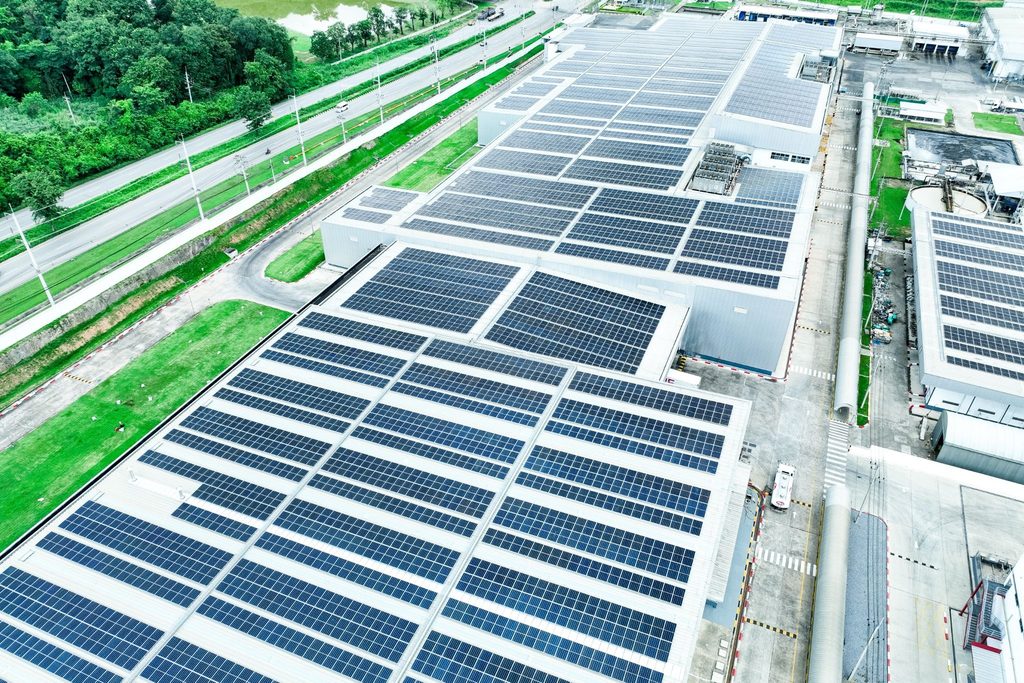
Factories and warehouses often have expansive roof areas that serve little purpose beyond sheltering the building. Installing solar panels allows businesses to turn that unused space into an energy-generating asset without requiring additional land, since the business already owns or leases the building and the roof is already there.
Solar Can Help Businesses Manage Long-Term Energy Costs
Once a PV system is installed, sunlight itself does not come with a monthly fuel bill, so businesses can generate part of their electricity requirement on-site rather than relying entirely on purchased electricity. The financial benefit depends on electricity consumption, tariff structure, solar system size, operating hours, roof orientation and installation cost, which is why a proper feasibility assessment is essential.
You can explore Suria & Sonne’s Solar Building solutions to understand how solar PV can be applied to commercial properties.
How Does Solar ATAP Make Industrial Solar More Accessible?
Solar ATAP makes industrial solar more accessible by allowing non-domestic consumers to install solar PV capacity of up to 100% of maximum demand, subject to technical assessment and a 1MW limit, while also permitting Power Purchase Agreement and solar leasing models that can reduce or remove upfront capital requirements entirely.
Solar ATAP was introduced as a continuation of the country’s previous Net Energy Metering (NEM) programme, which concluded at the end of June 2025, allowing consumers to generate solar electricity for self-consumption while providing a mechanism for surplus electricity to be exported to the grid. Under Solar ATAP, registered solar investors may offer zero-upfront-capital models through PPA or leasing arrangements, which can make solar worth investigating for companies wanting to reduce capital expenditure while still pursuing renewable energy.
You can learn more about Suria & Sonne’s solar solutions and the company’s approach to solar PV installation.
Can Homeowners Benefit From Solar Too?
Homeowners can benefit from solar too, since the advantages are not limited to large industrial facilities; Malaysian homeowners can use solar panels to reduce dependence on grid electricity and potentially lower monthly bills, though the same principle applies at a much smaller scale than industrial solar.
For example, a homeowner with a monthly electricity bill of RM600 could potentially save a substantial portion of that bill with a suitably sized solar PV system, and for a high-consumption household, solar can potentially reduce electricity costs by up to around 90% in suitable circumstances, though this should never be treated as a guaranteed saving for every home. The right question is not simply how much solar costs, but how much electricity a property can realistically generate, how much of it can be consumed, and what that will save over the system’s lifetime, the same principle that applies to industrial solar, only with much bigger numbers.
How Does the Business Case Go Beyond Electricity Savings?
The business case for industrial solar goes beyond electricity savings, since companies face growing expectations from customers, investors and supply-chain partners to demonstrate credible environmental commitments, while a solar-equipped facility also makes better use of an existing asset that would otherwise sit idle above the business.
Reducing Carbon Emissions
Generating electricity from solar can help businesses reduce their reliance on conventional grid electricity and lower the carbon footprint associated with their operations, which can become particularly relevant for manufacturers supplying international markets as global supply chains place greater emphasis on sustainability and emissions reporting.
Strengthening Corporate Sustainability Goals
Solar can also become a visible component of a company’s Environmental, Social and Governance (ESG) strategy. A solar-equipped factory provides a tangible example of renewable energy investment rather than relying solely on sustainability statements.
Making Better Use of Existing Assets
An industrial rooftop is already a significant physical asset, and solar PV can turn part of that space into an additional source of value, treating the roof as part of the business’s energy infrastructure rather than simply part of the building.
You can view Suria & Sonne’s solar projects to see examples of completed installations.
Is Every Malaysian Industry Suitable for a Solar Farm?
Not every Malaysian industry is suitable for a solar farm, since a successful project starts with an assessment of the site and its electricity consumption, including roof size, structural condition, shading, orientation, electricity demand, operating hours and the business’s future energy requirements.
A factory that operates heavily during daylight hours may have a very different solar opportunity from a facility that consumes most of its electricity at night. For larger non-domestic installations, technical assessments may also be required: under Solar ATAP, systems above 72kW may require a Connection Assessment Study, while high-voltage installations may require a Power System Study. This is why businesses should assess solar based on their actual load profile rather than simply copying another company’s system.

Frequently Asked Questions About Solar Farms
Conclusion
For Malaysian industries, the question is no longer simply whether solar energy is environmentally friendly. The bigger question is whether businesses can afford to ignore an opportunity to generate part of their electricity themselves. A well-designed solar farm or industrial rooftop solar system can help businesses reduce electricity expenditure, make better use of existing assets, strengthen sustainability credentials and improve long-term energy resilience.
With Solar ATAP now providing a framework for non-domestic consumers to install solar PV and explore different ownership and financing models, the opportunity is becoming increasingly practical for Malaysian businesses. At Suria & Sonne, we help businesses work out whether their roof and load profile make this worthwhile. Book a consultation to find out what your property could support.
Considering solar for your property?
Talk to our team about your electricity use and your roof, and we will recommend a system that fits.