Introduction
For Malaysian homeowners considering solar, one question often comes before everything else: which solar panel Malaysia brand should they choose? With dozens of manufacturers and models available, choosing a solar panel can feel surprisingly complicated with efficiency ratings, warranties, cell technology, degradation rates and price can all influence the decision.
At Suria & Sonne, we think the “best” solar panel is not necessarily the most expensive one. As Malaysia continues its transition towards renewable energy, residential solar is becoming an increasingly attractive option, helped along by the Solar Accelerated Transition Action Programme (Solar ATAP), introduced in January 2026 as the current framework for domestic solar generation.
TL;DR: Key Takeaways
The best solar panel Malaysia system is not necessarily the most expensive one on the market. For a typical home, the right choice balances efficiency, temperature performance, warranty protection, available roof space and overall return on investment, rather than brand name alone.
- Higher efficiency matters most for homes with limited available roof space.
- A lower temperature coefficient means less power loss in Malaysia’s heat.
- Warranty terms and degradation rates matter as much as the headline efficiency figure.
- Installer quality and after-sales support can matter as much as the panel itself.
What Makes a Good Solar Panel for Malaysian Homes?
Before comparing brands, it helps to understand what actually matters when buying a solar panel Malaysia system, since rooftop panels here are exposed to intense sunlight, high temperatures, heavy rainfall and high humidity throughout the year. Four factors matter most: efficiency, temperature performance, warranty and degradation, and installer support.
Efficiency
Panel efficiency refers to how effectively a panel converts sunlight into electricity. Higher-efficiency panels can be particularly useful for homes with limited roof space — if two panels occupy a similar amount of space but one produces more electricity, the higher-efficiency panel helps homeowners maximise the available rooftop area.
Temperature Performance
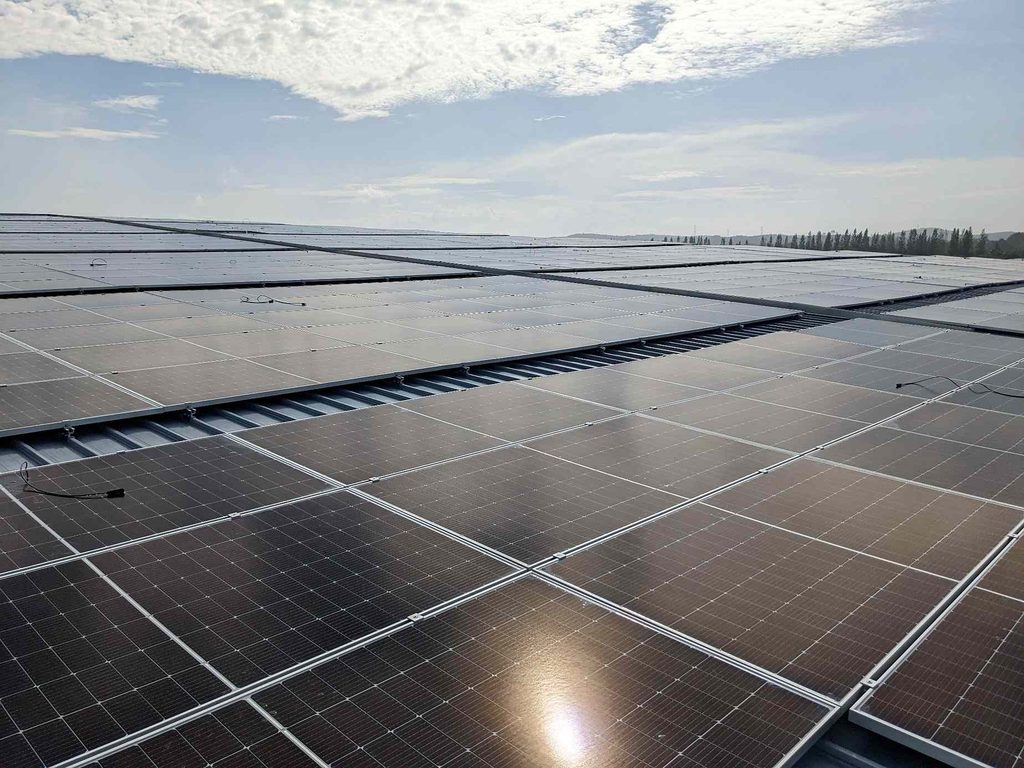
Solar panels do not necessarily perform better simply because temperatures are higher. In fact, excessive heat can reduce their electrical output, which makes a panel’s temperature coefficient an important consideration for Malaysian homeowners. A panel with a lower temperature coefficient generally experiences less power loss as temperatures rise.
Warranty and Degradation
Solar panels are designed to operate for decades, so warranty protection matters. Homeowners should look beyond a simple “25-year warranty” claim, since there are usually separate warranties covering the physical product and its long-term power output. A panel that maintains a higher percentage of its original output over time can potentially deliver greater lifetime electricity savings.
Installer and After-Sales Support
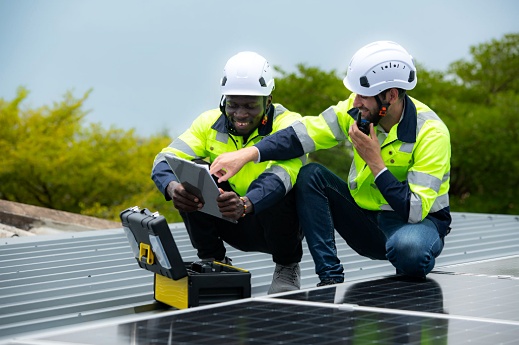
Even an excellent panel can become a poor investment if installation quality or after-sales service is lacking. Homeowners should evaluate the installer as carefully as the panel brand — ask who will handle warranty claims, whether the installer is properly registered, and what happens if an inverter or panel needs servicing years after installation.
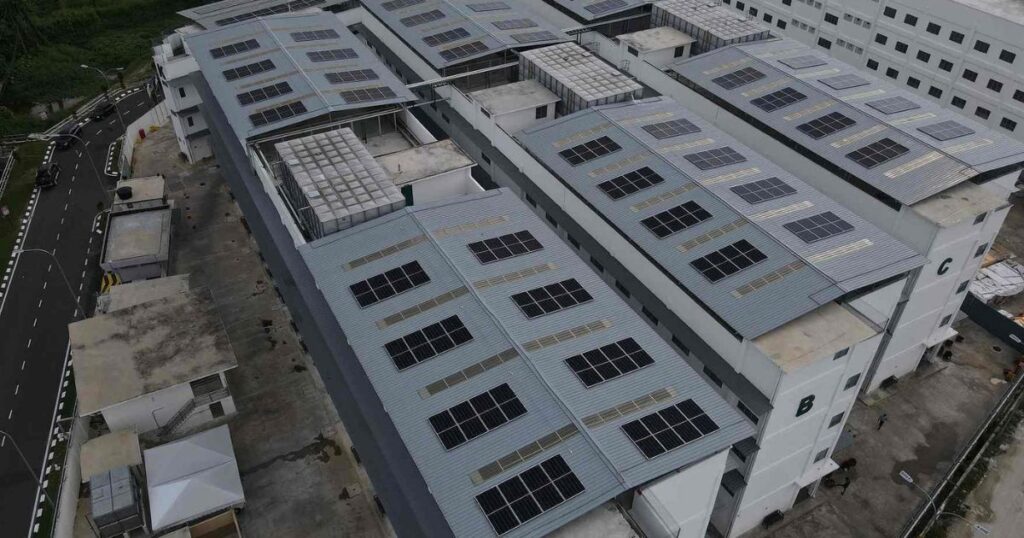
You can view Suria & Sonne’s completed solar projects for examples of different solar PV applications.
Which Solar Panel Brands Are Best for Malaysian Homes?
There is no single winner for every household, but several established brands are commonly considered when comparing residential solar systems in Malaysia, each with different strengths depending on roof space, budget and technology preference. The right choice ultimately depends on the specific model offered, not the manufacturer’s name alone.
Table 1: Established solar panel brands commonly considered for Malaysian homes.
| Brand | Known For | Best Suited For |
| Jinko Solar | Tiger Neo range, N-type TOPCon technology | Homeowners wanting modern technology and strong long-term performance |
| LONGi Solar | Hi-MO series, high efficiency | Homes with limited roof space, prioritising efficiency |
| Trina Solar | Vertex series, established global presence | Homeowners wanting a balance of performance and value |
| Canadian Solar | Global manufacturer across residential and utility scale | Homeowners wanting a globally established alternative |
| JA Solar | DeepBlue series, modern high-efficiency cells | Homeowners balancing performance with installation cost |
Ultimately, the difference between brands should be evaluated based on the specific model being offered, rather than simply the manufacturer’s name.
How Much Can Homeowners Save With Solar Panels?
The amount a homeowner can save depends on several factors, including monthly electricity consumption, system size, roof orientation, shading, daytime electricity usage and the applicable electricity programme, so solar savings are not determined by panel brand alone. A premium panel on a poorly oriented roof can underperform a well-designed system using another brand.
A Practical Example
Consider a household with a monthly electricity bill of RM500, or approximately RM6,000 a year. The table below illustrates how different offset levels could translate into potential annual savings — these are illustrations, not guaranteed outcomes.
Table 2: Illustrative annual savings at different solar offset levels, based on a hypothetical RM6,000 annual electricity spend.
| Solar Offset | Illustrative Annual Saving |
| 50% | Around RM3,000 |
| 70% | Around RM4,200 |
| 90% | Around RM5,400 |
Actual results can vary considerably between homes. Under Solar ATAP, domestic consumers can install solar PV primarily for self-consumption, with surplus electricity exported to the grid subject to the programme’s mechanism. Current domestic capacity limits are up to 5 kW for single-phase homes and 15 kW for three-phase homes, subject to the relevant technical requirements, which makes proper system sizing especially important.
You can learn more about Suria & Sonne’s solar solutions and the company’s approach to solar PV installation.
However, installing the largest possible system is not necessarily the best financial decision. The system should be designed around the property’s electricity consumption, available roof space and applicable programme requirements.
What Should Homeowners Compare Before Buying?
Rather than asking only which solar panel brand is best, homeowners should compare climate suitability, realistic generation estimates, the different types of warranty on offer, after-sales support, and expected return on investment. These five questions matter more to the final result than the manufacturer’s name on its own.
Is the Panel Suitable for Malaysia’s Climate?
Look at temperature performance, humidity resistance and relevant certifications.
How Much Electricity Will the System Actually Generate?
Ask for a realistic generation estimate based on your home’s location, roof design and shading.
What Are the Warranties?
Understand the difference between product warranty, performance warranty, inverter warranty and installation workmanship coverage.
Who Handles After-Sales Service?
A reputable installer should be able to explain exactly how maintenance and warranty claims are handled.
What Is the Expected Return on Investment?
Compare the system’s total cost against estimated annual electricity savings rather than focusing purely on the cheapest quotation.
Frequently Asked Questions About Solar Panel Malaysia
Conclusion
Choosing the right solar panel Malaysia system is about more than picking the brand with the highest efficiency or the longest warranty. Jinko Solar, LONGi, Trina Solar, Canadian Solar and JA Solar are all established names worth considering, but the specific panel model, system design and installer can have just as much impact on the final result.
The smartest approach is to look at the complete picture: how much electricity your home consumes, how much your roof can generate, what the system costs, how much it can realistically save, and how well it will perform over the next 20 to 30 years. If you are considering solar for your home, book a consultation with Suria & Sonne for a professional assessment.
Considering solar for your property?
Talk to our team about your electricity use and your roof, and we will recommend a system that fits.