Introduction
Solar energy has become an increasingly practical option for Malaysian homeowners and businesses looking to reduce electricity costs and improve energy sustainability. With Malaysia receiving abundant sunlight throughout the year, solar panels can convert sunlight into electricity for homes, offices, factories, commercial buildings and other facilities. At Suria & Sonne, we help both homeowners and businesses work out whether solar makes sense for their specific property.
Between 2020 and 2026, Malaysia’s rooftop solar landscape has changed considerably, from the Net Energy Metering (NEM) programmes to the introduction of the Solar Accelerated Transition Action Programme (Solar ATAP) in January 2026.
This article explains the key benefits of using solar panels, the factors affecting their cost, and what Malaysian property owners should consider before installing a solar PV system.
TL;DR: Key Takeaways
Solar panels can meaningfully reduce electricity costs for Malaysian homes and businesses, particularly under the new Solar ATAP programme introduced in January 2026. Installed costs vary widely depending on system size and equipment, but the right system depends on your property’s electricity consumption and roof space, not on upfront price alone.
- Solar panels reduce grid electricity reliance during daylight hours, cutting monthly bills.
- Solar ATAP replaced NEM in January 2026 as Malaysia’s current rooftop solar programme.
- Residential systems typically cost RM3,000 to RM4,000 per kWp installed, per 2026 estimates.
- System size should match electricity consumption and roof space, not just available budget.
- Battery storage is optional, worth considering only for specific energy needs.
Why Are Solar Panels Becoming More Popular in Malaysia?
Malaysia’s abundant sunlight and increasing focus on renewable energy have made rooftop solar an increasingly attractive option for homes and businesses. Government-backed programmes have supported this shift: NEM 3.0 ran from 2021 until June 2025, and Solar ATAP, introduced in January 2026, now allows consumers to generate solar electricity for self-consumption and export eligible surplus to the grid.
self-consumption and export eligible surplus to the grid.
For businesses, this makes solar worth considering as part of a longer-term energy management strategy.
What Are the Benefits of Using Solar Panels?
Using solar panels can reduce electricity costs, lower dependence on grid electricity, cut carbon emissions, and make productive use of unused rooftop space. The extent of these benefits depends on a property’s electricity consumption, roof conditions, and the specific solar PV system installed.
Reduce Electricity Costs
One of the main reasons Malaysian consumers install solar panels is to reduce their reliance on electricity purchased from the grid. A solar PV system generates electricity during daylight hours, and the electricity produced can first be used by the property, reducing the amount that needs to be purchased from the grid.
For businesses that operate primarily during the day, this can be particularly useful, since factories, warehouses, offices and commercial buildings may have substantial daytime electricity consumption. The actual savings depend on factors such as:
- Solar PV system size
- Electricity consumption
- Operating hours
- Roof orientation and shading
- Solar irradiation
- Electricity tariff
- System performance
Reduce Dependence on Grid Electricity
Electricity tariffs and energy costs can change over time. Generating part of your electricity onsite through solar panels can reduce your dependence on electricity purchased from the grid.
Solar does not completely eliminate electricity bills, particularly when a property still requires grid electricity at night or during periods of low solar generation. However, producing electricity onsite can give property owners greater control over part of their energy consumption.
Reduce Carbon Emissions
Solar PV systems generate electricity without directly burning fossil fuels during operation. By using solar electricity instead of purchasing all electricity from the grid, businesses and homeowners can reduce the emissions associated with their electricity consumption.
Solar energy can therefore support companies working towards sustainability, ESG and renewable energy objectives.
Make Better Use of Rooftop Space
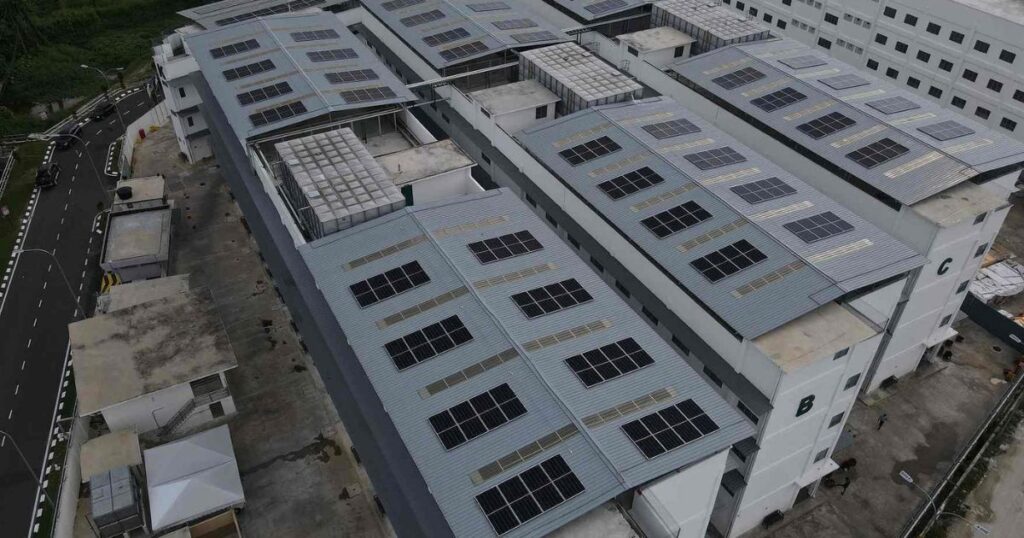
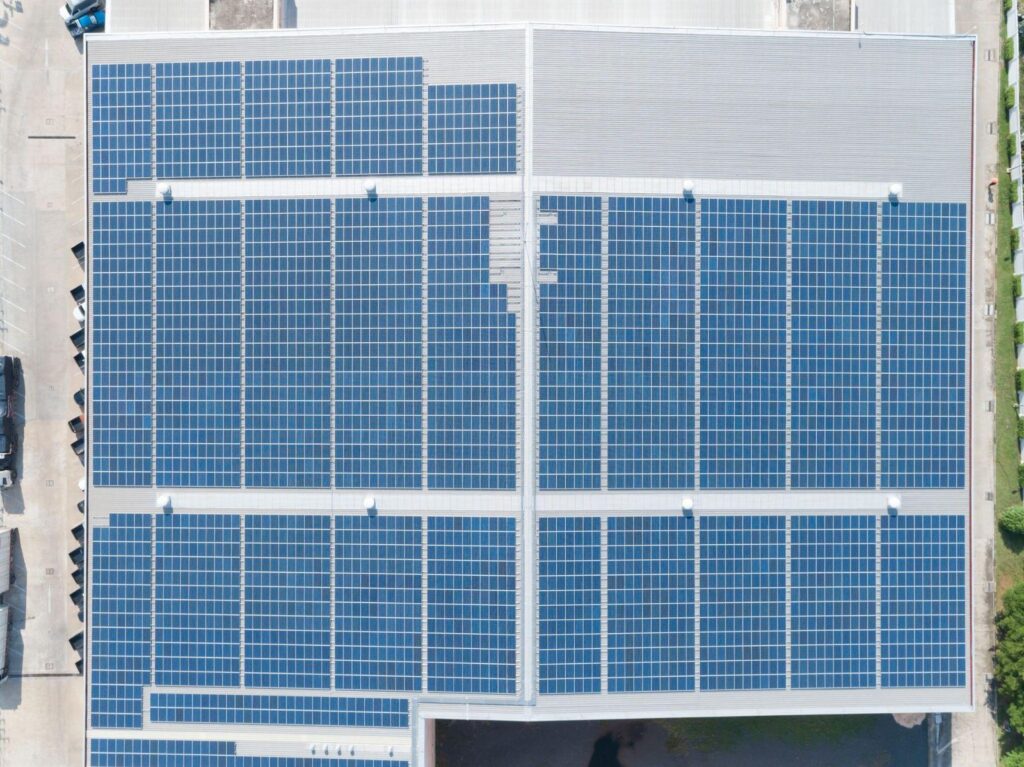
Many Malaysian commercial and industrial buildings have large areas of unused rooftop space. Solar panels can turn these areas into productive energy-generating assets.
Suria & Sonne’s project portfolio includes commercial, government, education and industrial solar installations. Businesses can explore Suria & Sonne’s Solar Building solutions to understand how solar PV can be applied to commercial properties.
How Much Do Solar Panels Cost in Malaysia?
There is no single fixed price for installing solar panels in Malaysia, since total cost depends on system size, equipment and installation requirements. For 2025 to 2026, industry estimates commonly place installed residential systems in the range of roughly RM3,000 to RM4,000 per kWp, though actual quotations vary.
Understanding Solar Panel Pricing
Solar PV systems are normally measured according to their capacity in kilowatt-peak (kWp). Historical Malaysian solar pricing was higher than today’s market estimates: since 2020, improvements in manufacturing, technology and global solar supply have contributed to more competitive solar PV pricing.
These figures should be treated as indicative market ranges rather than fixed prices — a proper quotation from a licensed installer will always be more accurate for a specific property.
Indicative Residential Solar Panel Costs
| Solar PV System Size | Indicative Installed Cost |
|---|---|
| 3 kWp | RM9,000 – RM15,000 |
| 5 kWp | RM15,000 – RM25,000 |
| 8 kWp | RM24,000 – RM40,000 |
| 10 kWp | RM30,000 – RM50,000 |
The final price depends on the selected panels, inverter, mounting system, roof condition, installation complexity and other project requirements.
Commercial Solar Panel Costs
Commercial and industrial solar systems can be significantly larger than residential systems. Solar installations can range from hundreds of kWp to several MWp depending on the property’s electricity consumption and available roof area.
Suria & Sonne’s completed projects demonstrate this range, including commercial and industrial systems from several hundred kWp to multi-megawatt installations. Businesses can view Suria & Sonne’s completed solar projects for examples of different solar PV applications.
What Factors Affect the Cost of Solar Panels?
Several factors affect the total cost of a solar PV system, including system capacity, panel and inverter selection, roof condition and installation complexity, and whether battery storage is included. The right combination depends on a property’s electricity consumption and long-term energy goals, not on price alone.
1. Solar System Capacity
The size of the solar PV system is one of the biggest factors affecting total project cost. A larger system requires more solar panels and generally requires a larger inverter and additional installation materials.
However, installing the largest possible system is not necessarily the best financial decision. The system should be designed around the property’s electricity consumption, available roof space and applicable programme requirements.
2. Solar Panel and Inverter Selection
Solar panels are only one component of a complete solar PV system.
Typical Solar PV Components
A standard installation can include:
- Solar PV modules
- Solar inverter
- Mounting structure
- DC and AC cabling
- Electrical protection equipment
- Monitoring system
- Installation labour
- Testing and commissioning
- Application and connection work where applicable
The quality and specifications of these components can influence the total project price.
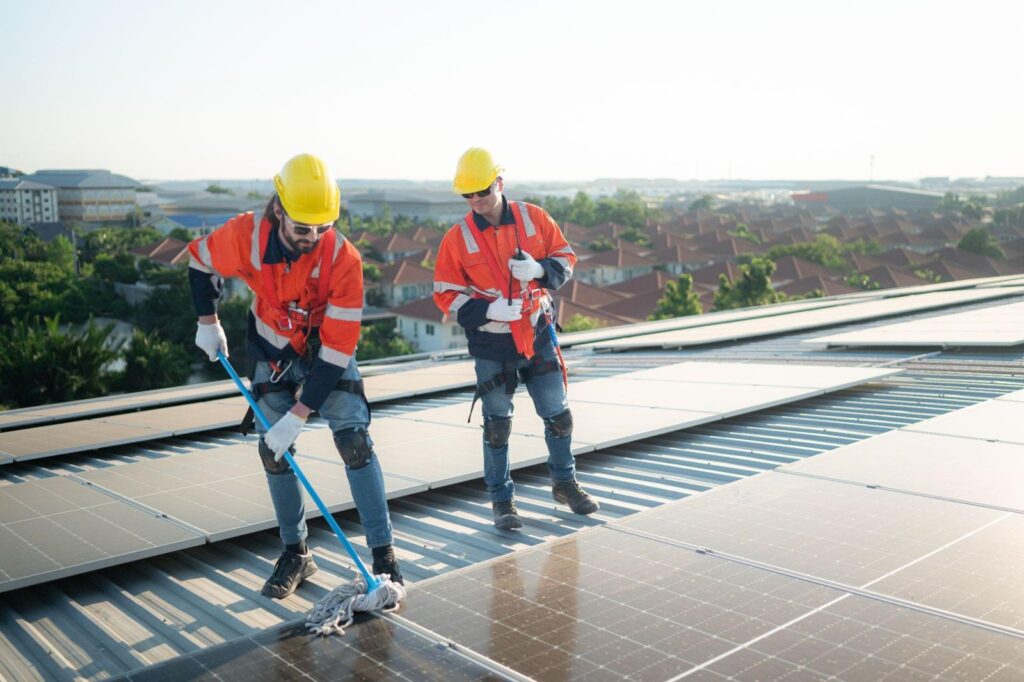
3. Roof Condition and Installation Complexity
The condition and design of a roof can significantly affect installation costs. Factors that may affect the installation include:
- Roof material
- Roof pitch
- Building height
- Accessibility
- Shading
- Structural requirements
- Cable routing
- Existing electrical infrastructure
For commercial and industrial buildings, additional structural and electrical assessments may be necessary.
4. Battery Storage
A grid-connected solar PV system does not necessarily require batteries. However, homeowners and businesses that want to store solar electricity for later use may consider battery storage.
When Should You Consider Solar Batteries?
Battery storage may be considered when a property has:
- High electricity consumption outside daylight hours
- A requirement for backup power
- A need to increase solar self-consumption
- Specific energy management objectives
However, batteries increase the initial investment, so their financial value should be assessed based on the property’s actual electricity consumption.
5. Installation and Professional System Design
The cheapest solar quotation is not necessarily the most suitable option. A professional solar assessment should consider electricity consumption, roof area, shading, system capacity, electrical infrastructure, equipment specifications, and applicable programme requirements.
You can learn more about Suria & Sonne’s solar solutions and the company’s approach to solar PV installation.
How Does Solar ATAP Affect Solar Panels in Malaysia?
Solar ATAP, introduced on 1 January 2026 by Malaysia’s Ministry of Energy Transition and Water Transformation and implemented by SEDA Malaysia, replaced the NEM programme as the country’s current rooftop solar framework. It allows properties to generate solar electricity for self-consumption, with eligible surplus electricity exported to the grid under the programme’s rules.
From NEM 3.0 to Solar ATAP
Malaysia’s rooftop solar framework has developed considerably since 2020. NEM 2.0 ended after its quota was fully subscribed in December 2020, and NEM 3.0 subsequently operated from 2021 until June 2025.
Solar ATAP was introduced on 1 January 2026 as Malaysia’s current rooftop solar programme, continuing to support rooftop solar generation for self-consumption while allowing eligible surplus electricity to be exported to the grid under its applicable rules, according to SEDA Malaysia’s official announcement.
How Does Solar ATAP Work?
In simple terms, solar panels installed on a property generate electricity during daylight hours. The generated electricity can first be consumed by the property. If the solar system generates more electricity than the property is consuming at that time, eligible surplus electricity can be exported to the grid according to the Solar ATAP mechanism.
This means the value of a solar PV system depends not only on how much electricity the panels generate, but also on how much electricity the property can use.
Is Solar Still Worth Considering in 2026?
For many Malaysian properties, solar can still be worth considering, particularly where electricity consumption is relatively high and there is sufficient suitable roof space. However, the financial outcome varies between properties.
A proper assessment should consider current electricity consumption, electricity tariff, solar PV capacity, daytime electricity usage, roof suitability, installation cost, Solar ATAP requirements, and expected system generation.
How Do You Decide Whether Solar Panels Are Suitable for Your Property?
Deciding whether solar panels suit your property means reviewing your electricity consumption, assessing your roof’s suitability, comparing complete system quotations rather than panel count alone, and reviewing an installer’s previous projects. Together, these checks give a realistic picture of whether solar makes financial sense for your specific property.
Review Your Electricity Consumption
Start by reviewing your recent electricity bills. Look at monthly electricity consumption, monthly electricity costs, peak electricity demand where applicable, daytime versus nighttime usage, and seasonal changes in consumption.
Properties with significant daytime electricity consumption may be able to use a larger proportion of their solar generation directly.
Assess Your Roof
A solar assessment should consider available roof area, roof orientation, roof angle, shading, roof condition, structural capacity, and installation access. This helps determine how many solar panels can realistically be installed.
Compare the Complete Solar System
When comparing quotations, do not compare only the number of solar panels. Instead, compare total system capacity, solar panel specifications, inverter specifications, mounting system, installation scope, warranty, monitoring system, application and connection support, maintenance requirements, and total project price.
This provides a more accurate comparison between solar providers.
Review Previous Solar Projects
Looking at completed projects can help you evaluate an installer. Suria & Sonne’s project portfolio includes residential, commercial, government, education, hospitality and industrial installations.
You can view Suria & Sonne’s solar projects to see examples of completed installations. For businesses looking for a professional assessment, contact Suria & Sonne to discuss the requirements of your property.
Frequently Asked Questions About Solar Panels
Conclusion
Solar panels can provide Malaysian homeowners and businesses with a practical way to generate renewable electricity, reduce grid electricity consumption and make better use of available rooftop space. The cost of solar PV systems has changed significantly since 2020, while Malaysia’s rooftop solar policies have also evolved from NEM 2.0 and NEM 3.0 to Solar ATAP in 2026.
Rather than choosing a solar system based purely on its upfront price, property owners should consider system capacity, electricity consumption, equipment quality, roof suitability, installation requirements and the applicable solar programme. Suria & Sonne can help you weigh up all of these factors for your specific property. If you are considering solar for your home, commercial building or industrial property, book a consultation with our team.
Considering solar for your property?
Talk to our team about your electricity use and your roof, and we will recommend a system that fits.