Introduction
For many businesses in Malaysia, electricity is no longer just another monthly expense. For offices, retail outlets, warehouses, factories, hotels and other commercial premises, energy costs can represent a significant portion of operating expenditure. As electricity demand continues to grow, businesses are looking for smarter ways to control overheads without compromising productivity.
With the right commercial solar services, businesses can use their rooftop space to generate clean electricity, reduce their dependence on grid-supplied power and potentially achieve substantial long-term savings. At Suria & Sonne, this is the question we help business owners answer most often: does commercial solar actually pay off, and how?
TL;DR: Key Takeaways
Commercial solar services help businesses cut costs mainly by letting them consume solar electricity directly during the day, when commercial energy demand is typically highest. Beyond lower monthly bills, benefits include protection against rising energy costs, better use of unused roof space, and flexible financing options that don’t require full upfront capital.
- Daytime solar generation lines up with typical commercial electricity demand.
- Solar ATAP allows non-domestic systems up to 100% of maximum demand, or 1 MW.
- PPA and leasing models can remove the need for upfront capital entirely.
- Poor system design, not the panels themselves, is the biggest risk to returns.
Why Are Businesses Turning to Solar Energy?
Waktu penggunaan elektrik penting untuk solar rumah kerana panel solar menghasilkan elektrik apabila matahari bersinar, biasanya pada waktu siang. Jika penghawa dingin, peti sejuk, mesin basuh atau peralatan lain digunakan pada waktu yang sama, tenaga solar yang dijana boleh terus menyokong penggunaan tersebut tanpa perlu mengambil bekalan daripada grid.
Sebaliknya, jika rumah kosong sepanjang hari dan kebanyakan peralatan hanya digunakan selepas jam 6 petang, sebahagian besar penggunaan elektrik berlaku ketika pengeluaran solar sudah menurun atau tiada lagi.
Solar Paling Aktif Ketika Matahari Bersinar
Businesses are turning to solar energy because commercial buildings often consume large amounts of electricity during daylight hours, when air-conditioning, lighting, machinery, refrigeration and computers all operate throughout normal business hours. Solar panels generate electricity during that same window, meaning solar-generated electricity can be used directly on-site instead of purchased from the grid.
Solar ATAP, Malaysia’s current rooftop solar programme, allows eligible non-domestic consumers to install solar PV systems up to 100% of their maximum demand, subject to technical requirements, with a maximum limit of 1 MW. The programme also allows excess solar energy to be exported to the grid under its prescribed mechanism.
How Can an Unused Rooftop Become a Business Asset?
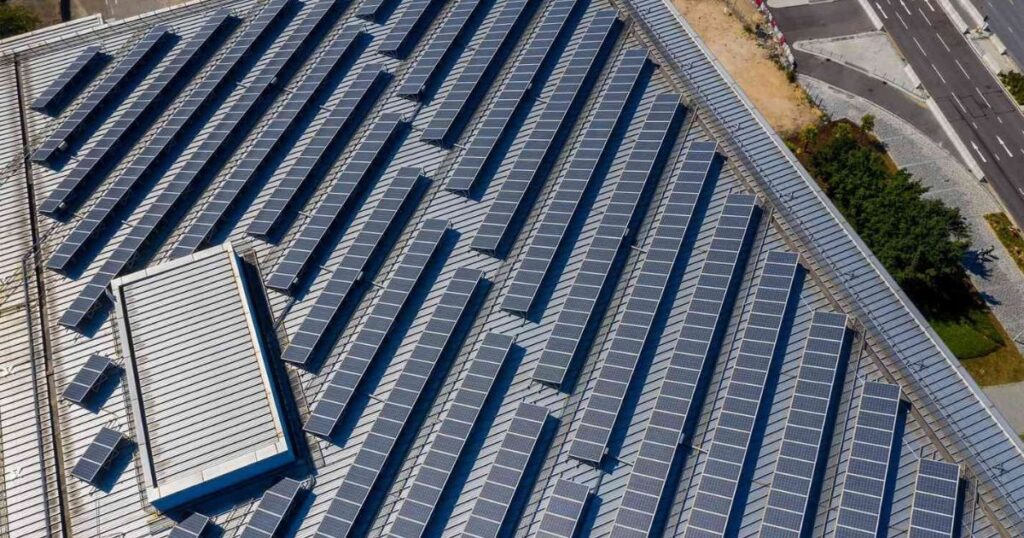
An unused commercial rooftop can become a genuine business asset, since warehouses, factories, shopping premises and office buildings often have considerable roof area exposed to sunlight that generates no financial value at all. Rather than leaving this space unused, businesses can install solar panels and turn it into a source of electricity generation.
This is one of the key reasons professional commercial solar services begin with a site assessment. A qualified provider can evaluate the available roof area, electricity consumption, building orientation, shading and structural considerations before recommending an appropriate solar system.
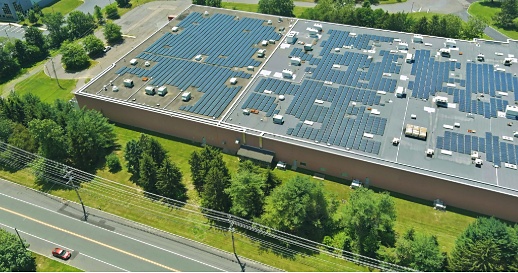
You can explore Suria & Sonne’s Solar Building solutions to understand how solar PV can be applied to commercial properties.
How Do Commercial Solar Services Reduce Operating Costs?
Commercial solar services reduce operating costs in several distinct ways beyond simply installing panels, since a professional provider looks closely at a business’s actual electricity consumption and designs a system around its specific energy requirements rather than offering a generic package.
Lower Monthly Electricity Bills
The most immediate benefit is the potential reduction in electricity purchased from the grid. The more solar electricity a business can use directly, the greater the potential reduction in grid electricity consumption — particularly valuable for businesses with substantial daytime operations, since solar generation and electricity demand occur at the same time.
Greater Protection Against Rising Energy Costs
Electricity is a recurring operating expense a business cannot simply stop using without affecting operations. Solar provides an alternative way of generating part of the electricity required by the premises, giving businesses greater control over a portion of their future electricity costs and reducing exposure to fluctuations in grid electricity expenses.
Better Use of Available Roof Space
Commercial properties often have extensive rooftops that generate little direct financial value. Installing solar panels can turn this underutilised area into productive infrastructure — for a factory or warehouse, a large rooftop could accommodate a substantial PV system, subject to technical and structural requirements, making solar particularly attractive for businesses that expect to operate from the same location for many years.
Potentially Lower Upfront Financial Pressure
Businesses do not necessarily have to rely solely on an outright purchase. Under Solar ATAP, eligible applicants can explore different models, including outright purchase, financing, Power Purchase Agreements (PPAs) and solar leasing through registered solar PV investors, with some PPA or leasing arrangements offering zero-upfront-capital models.
You can view Suria & Sonne’s completed solar projects to see examples of installations across different commercial sectors.
Why Do Professional Commercial Solar Services Matter?
Professional commercial solar services matter because installing solar panels is not simply a matter of placing panels on a roof a commercial system needs to be properly sized, designed, installed, tested and commissioned, since poor system design can result in lower-than-expected energy generation and weaker financial returns.

1. Energy Consumption Analysis
The process should begin with an analysis of the business’s electricity consumption. Historical electricity bills, maximum demand and operating hours can help determine how much solar generation the business can realistically use.
2. Site and Roof Assessment
A professional assessment can identify suitable roof areas while considering shading, roof condition, orientation, structural requirements and electrical infrastructure.
3. System Design and Installation
The solar provider can then design a system based on the building’s electricity demand and available space. Components such as solar panels, inverters, monitoring systems and electrical protection equipment must work together efficiently.
4. Regulatory and Technical Support
Commercial solar projects can involve technical assessments and regulatory requirements. Under Solar ATAP, non-domestic systems above 72 kW may require a Connection Assessment Study (CAS), while certain higher-capacity or high-voltage installations may require further assessment. Working with a registered PV service provider can make this process significantly more straightforward.
Is Commercial Solar a Good Investment?
Whether commercial solar is a good investment depends on the business: a commercial property with high daytime electricity consumption, a suitable rooftop and long-term occupancy may have a particularly strong case for solar, while businesses should look beyond installation price alone to expected generation, system lifespan and financing costs.
A reputable solar provider should be able to explain these figures clearly rather than simply presenting an attractive headline saving. Businesses can also look into broader energy-efficiency support: SEDA Malaysia’s Energy Audit Conditional Grant, for example, has historically supported larger commercial and industrial premises in identifying energy-saving opportunities through structured energy audits, though eligibility and current programme status should be confirmed directly with SEDA before assuming a specific business qualifies.
Frequently Asked Questions About Commercial Solar Services
Conclusion
For businesses facing rising operational costs, solar energy is increasingly more than an environmental initiative — it can be a practical financial strategy. The right commercial solar services can help businesses assess their energy consumption, design an appropriately sized system, navigate technical requirements and maximise the amount of solar electricity used on-site.
Ultimately, the best solar investment is not simply the system with the most panels. It is the system designed around how a business actually uses electricity. If you are considering solar for your commercial or industrial property, book a consultation with Suria & Sonne for a professional assessment.
Considering solar for your property?
Talk to our team about your electricity use and your roof, and we will recommend a system that fits.