Introduction
Malaysia’s abundant sunshine has made solar power an increasingly important part of the country’s energy transition. While rooftop solar systems are becoming more familiar to homeowners and businesses, solar farm developments operate on a completely different scale. At Suria & Sonne, we’re often asked to put that scale into perspective for people encountering it for the first time.
A solar farm can range from a relatively small ground-mounted installation to a utility-scale project spanning hundreds of acres and generating tens or hundreds of megawatts of electricity, with investment that can run into tens or even hundreds of millions of ringgit. The short answer to “how much does it cost” is that there is no single fixed price — but historical Malaysian large-scale solar projects and techno-economic studies provide useful benchmarks for understanding the scale of investment involved.
TL;DR: Key Takeaways
Building a solar farm in Malaysia can require tens of millions of ringgit for a smaller project and well over RM100 million for a large utility-scale development, based on historical Malaysian benchmarks. The final cost depends heavily on land, grid connection, equipment and financing structure, not just the panels themselves.
- Malaysia’s 50 MW Sepang solar farm was financed at RM339 million.
- Land, grid connection and civil works can rival the panels in total cost.
- Bigger projects don’t automatically mean better returns without the right economics.
- Rooftop solar and utility-scale solar farms serve entirely different purposes.
What Is a Solar Farm?
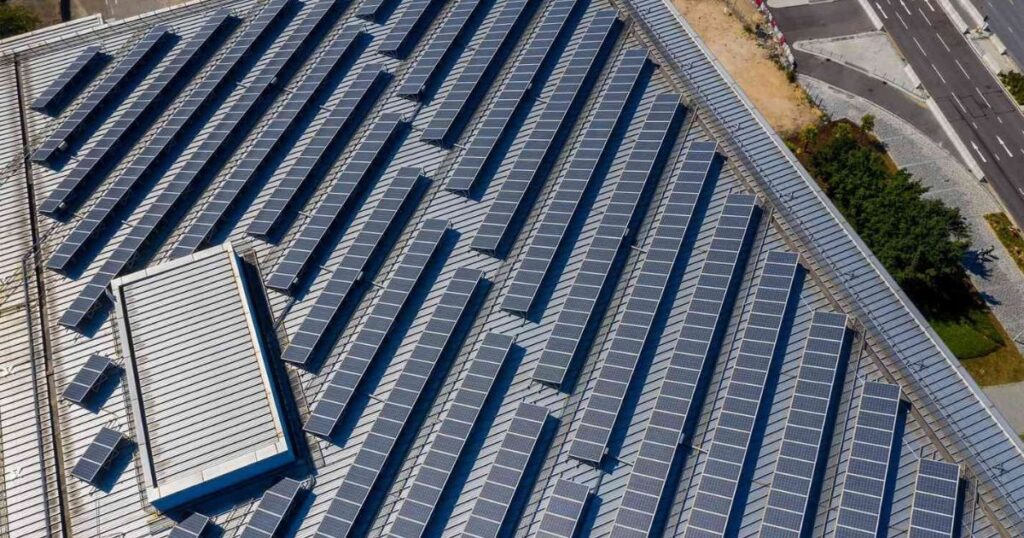
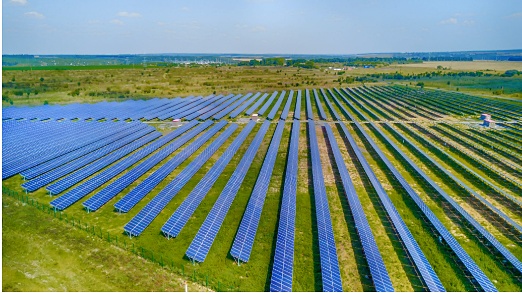
A solar farm is a large ground-mounted photovoltaic installation designed to generate electricity on a commercial or utility scale, unlike rooftop solar, which primarily reduces the electricity consumption of an individual property. A solar farm typically generates electricity for sale to the grid or under a long-term power purchase arrangement instead.
In Malaysia, the Large Scale Solar (LSS) programme uses competitive bidding to encourage the development of large-scale solar PV plants and drive down the levelised cost of electricity. A project may include thousands or even hundreds of thousands of solar panels, together with inverters, mounting structures, transformers, substations, cabling, monitoring systems and grid-connection infrastructure.
How Much Does a Solar Farm Cost in Malaysia?
There is no universal construction price per megawatt, since the final cost depends on the project’s location, technology, land conditions, grid connection requirements and financing structure. Historical Malaysian projects can run into tens of millions of ringgit for a smaller solar farm and well over RM100 million for a large utility-scale development.
For example, the 50 MW solar project in Mukim Tanjung 12, Kuala Langat, Selangor (developed by TNB Sepang Solar Sdn Bhd) secured RM339 million in project financing, according to Mercom India’s coverage of the deal. Academic techno-economic modelling has separately estimated a net present cost of approximately RM168 million for a 50 MW LSS project, RM101 million for 30 MW and RM34 million for 10 MW, depending on the assumptions used — figures that illustrate a utility-scale solar project is a major infrastructure investment, not simply a matter of purchasing solar panels.
Actual costs for a new project in 2026 can differ significantly, since equipment prices, financing costs, land values, grid requirements and project specifications have all changed since these benchmark projects were built.
You can learn more about Suria & Sonne’s approach to solar PV installation, from residential systems through to larger commercial-scale projects.
What Makes Up the Cost of a Solar Farm?
The solar panels may be the most visible part of a solar farm, but they are only one component of the overall capital expenditure, which also includes inverters and electrical equipment, mounting structures, land and civil works, grid connection infrastructure, and development, approvals and professional services.
1. Solar PV Modules
Solar panels are usually one of the largest components of the equipment budget — a large solar farm can require tens or hundreds of thousands of modules. The choice of panel technology, efficiency, manufacturer and warranty can all influence the project’s upfront cost and long-term energy yield, since higher-efficiency modules may cost more but can produce more electricity from the same amount of land.
2. Inverters and Electrical Equipment
Solar panels generate direct current electricity, which must be converted into alternating current before it can be supplied to the grid, requiring inverters, transformers, switchgear, cables, protection systems and other electrical equipment. At utility scale, this electrical infrastructure can become a substantial part of the project’s budget.
3. Mounting Structures and Tracking Systems
Ground-mounted panels need robust structures capable of withstanding Malaysia’s weather conditions. Some projects also use tracking systems that adjust the panels’ position according to the sun — these can increase energy generation but add to both capital and maintenance costs.
4. Land and Civil Works
A solar farm needs sufficient space for panels, access roads, drainage, electrical equipment and other infrastructure, and terrain matters — a relatively flat site with good access can be considerably easier and cheaper to develop than land requiring extensive earthworks. For perspective, the 50 MW Tanjung 12 project occupied approximately 243 acres, while another 49 MW project in Sungai Siput used around 150 acres.
5. Grid Connection
Connecting a large PV plant to the electricity grid may require substations, transformers, underground or overhead cables and other interconnection infrastructure, and the distance between the solar farm and the nearest suitable grid connection point can have a significant impact on project costs. Malaysia’s LSS tender documentation specifically identifies balance-of-system equipment, interconnection facilities, land costs, civil works and commissioning among the capital expenditure considerations for solar projects.
6. Development, Approvals and Professional Services
Before construction begins, developers may need to undertake feasibility studies, engineering design, environmental assessments, land-related work, grid studies and regulatory applications. These costs are less visible than the panels themselves, but they’re essential to bringing a project from concept to commercial operation.
There is no single fixed price for installing solar panels in Malaysia, since total cost depends on system size, equipment and installation requirements. For 2025 to 2026, industry estimates commonly place installed residential systems in the range of roughly RM3,000 to RM4,000 per kWp, though actual quotations vary.

You can view Suria & Sonne’s completed solar projects for examples of different solar PV applications.
Does a Bigger Solar Farm Mean Better Returns?
A bigger solar farm does not necessarily mean better returns, since larger projects can benefit from economies of scale but must still account for the cost of land, grid connection, financing, equipment, operation and maintenance, as well as the electricity price or tariff secured for the project.
Malaysia’s LSS programme is specifically designed around competitive bidding, with the objective of reducing the levelised cost of energy from large-scale solar generation, and the historical trend in LSS bidding demonstrates how dramatically solar economics have evolved — research reviewing Malaysia’s LSS auctions found that winning bid prices declined substantially between the earlier LSS rounds and later auctions.
How Does Rooftop Solar Compare to Solar Farm Investment?
A solar farm and a residential rooftop system serve very different purposes and require very different investment levels — a homeowner does not need millions of ringgit to benefit from solar energy, since rooftop solar is designed to reduce the amount of electricity purchased from the grid, not to generate power for sale.
Under Malaysia’s current Solar ATAP programme, the government continues the core principle of allowing excess solar energy to be exported to the grid as an energy offset, following the conclusion of the NEM programme in June 2025. Potential savings depend on a home’s electricity consumption, solar system size, roof orientation, shading, system performance and electricity tariff — a household with a high electricity bill can potentially save hundreds of ringgit per month, while very high-consumption homes may approach RM1,000 per month, depending on the system and applicable programme.
This is why homeowners should look at solar as a long-term investment rather than simply asking “how much do the panels cost.” The more relevant question is how much electricity the system can offset over its lifetime, and how quickly that investment pays for itself.
Frequently Asked Questions About Solar Farms
Conclusion
Building a solar farm in Malaysia is a substantial infrastructure investment. Depending on capacity and specifications, a project can require tens to hundreds of millions of ringgit, with costs spread across PV modules, inverters, mounting structures, land, civil works, grid connection, development and ongoing operations. Historical Malaysian projects demonstrate just how much the industry has evolved, while the country’s LSS framework continues to push developers towards increasingly competitive solar generation costs.
For homeowners and businesses, the solar opportunity looks very different — a rooftop PV system can turn an unused roof into a source of electricity without anywhere near the same capital commitment. Whether it’s a 5 kW rooftop system or a 50 MW solar farm, the underlying principle is the same: the value of solar isn’t simply in how much it costs to install, but in how much clean electricity it can generate throughout its lifetime. If you’d like to discuss what scale of solar makes sense for your property, book a consultation with Suria & Sonne.
Considering solar for your property?
Talk to our team about your electricity use and your roof, and we will recommend a system that fits.