Introduction
Installing solar panels is a significant investment for any Malaysian homeowner. Beyond comparing prices, panel brands and estimated savings, there is one question that deserves just as much attention: is the solar installer properly registered with the Sustainable Energy Development Authority Malaysia (SEDA)? At Suria & Sonne, we think every homeowner should know how to check this themselves, not just take an installer’s word for it.
For homeowners exploring solar panel Malaysia options, checking an installer’s credentials is an important step towards making a safer and more informed decision. A professional installer should have the appropriate registration, qualified personnel and experience to design and install a solar photovoltaic (PV) system correctly. SEDA Malaysia maintains a Registered PV Service Providers Directory (RPVSP) for companies involved in solar PV services, including system design, installation, maintenance and consultancy, and states that registered providers undergo a vetting process designed to ensure compliance with relevant standards for quality, safety and performance.
TL;DR: Key Takeaways
Before buying a solar panel Malaysia system, check whether your installer is registered with SEDA Malaysia’s Registered PV Service Providers Directory (RPVSP), since registration is not the same as simply claiming to be a solar company. Verify the company name, qualified personnel and project experience before signing anything.
- SEDA’s RPVSP directory is public and searchable using the company’s legal name.
- Registration checks personnel, track record, electrical certification and company details.
- A public Qualified Person directory lets you verify specific named designers.
- Registration is one part of due diligence, not a guarantee of quality alone.
What Does It Mean to Be SEDA-Registered?
Being SEDA-registered means a company appears in SEDA Malaysia’s Registered PV Service Providers Directory, having submitted details such as company information, PV experience, track record, electrical certification and qualified personnel. This should not be confused with simply claiming to be a solar company, since a business can sell equipment or arrange installations without appearing in the directory at all.
For homeowners, this distinction matters. A solar PV system involves electrical work, structural considerations, system design and grid connection requirements, so choosing a company with the appropriate credentials can provide greater confidence that the installation is being handled by people with relevant industry qualifications and experience.
PIs SEDA Registration the Only Credential to Check?
SEDA registration is an important consideration but should not be treated as the only measure of a good installer, since the registration process also identifies qualified personnel such as GCPV system designers and GCPV wiremen or chargemen. A responsible homeowner should look at the bigger picture: registration, electrical competency, project experience, equipment, warranties, workmanship and after-sales support.
Table 1: Credentials worth checking beyond SEDA registration alone.
| Credential | What It Confirms | Where to Check |
| SEDA RPVSP registration | Company appears in the official PV service provider directory | SEDA’s RPVSP directory |
| GCPV Qualified Person status | A named individual holds recognised design or wiring competency | SEDA’s public Qualified Person directory |
| Suruhanjaya Tenaga (ST) certification | Electrical contractor registration for compliant wiring work | ST’s contractor registration records |
| CIDB / MOF registration | Construction and government-procurement eligibility | CIDB and MOF public registers |
How Do You Check if Your Solar Installer Is SEDA-Registered?
You can check if your solar installer is SEDA-registered through SEDA’s public online directories rather than relying solely on what the installer says during a sales presentation. The process involves confirming the company’s full legal name, searching the official directory, checking qualified personnel, and reviewing the company’s actual solar experience.
Step 1: Ask for the Company’s Full Legal Name
Start by asking the installer for its full registered company name. This is important because a marketing brand may be different from the company’s legal name; a company might advertise under one brand while its registration appears under another corporate name. Ask for the exact company name used for its SEDA registration and, where appropriate, its company registration details, rather than simply searching for a logo or brand name and assuming a similarly named company is the same business.
Step 2: Search the SEDA Registered PV Service Providers Directory
SEDA’s online system provides access to the Registered PV Service Providers Directory, listed among its official online services. Homeowners can use the directory to look for the installer’s company name and compare the listing against what the installer has provided, checking details such as company name, business address, contact details, nature of PV services and relevant registration information.
If the installer cannot be found, do not immediately assume it is fraudulent. First check whether you are searching for the correct legal company name; if there is still a discrepancy, ask the installer to explain it before signing a contract or making payment.
Step 3: Check the Installer’s Qualified Personnel
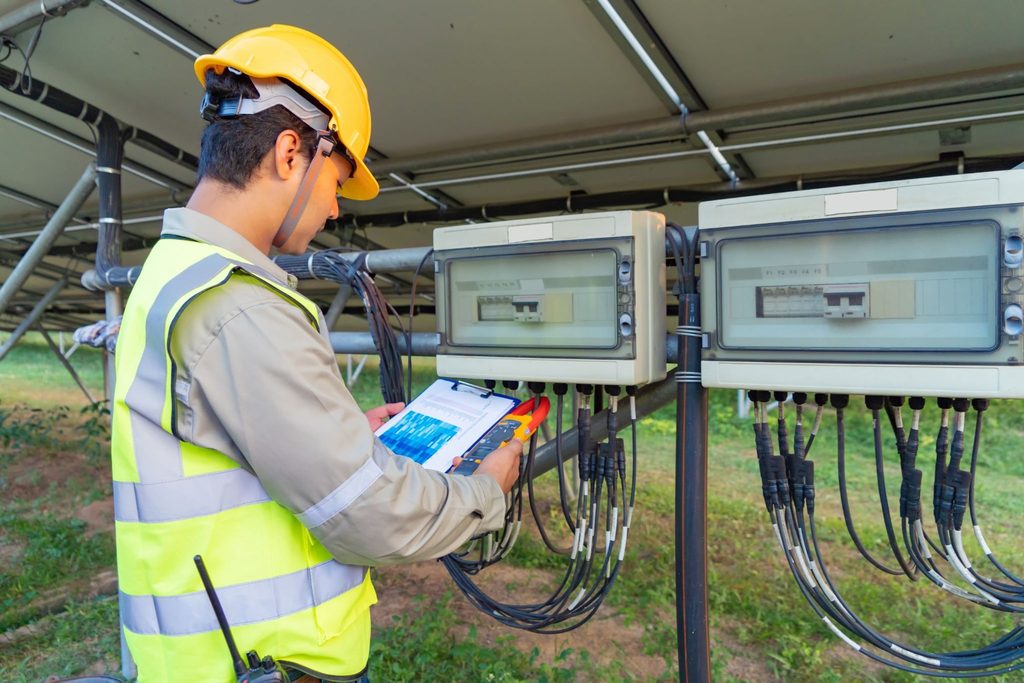
A reputable solar company should be able to explain who is responsible for designing and installing your system. SEDA’s registration information specifically refers to qualified personnel, including GCPV Designers and GCPV Wiremen/Chargemen, and SEDA also maintains a public Qualified Person directory where homeowners can check recognised individuals and their categories of qualification. This is particularly useful if an installer claims that a particular person is responsible for your system’s design or electrical work.
Step 4: Check the Company’s Solar Experience
Registration is one thing; experience is another. Ask how many residential solar installations the company has completed and whether it has experience with properties similar to yours, since installing solar panels on a landed terrace house is different from designing a large commercial PV system. SEDA’s RPVSP registration information itself asks companies to provide their PV experience and track record of completed projects, so a good installer should be comfortable showing examples of completed work.
For example, Suria & Sonne’s own credentials are publicly listed and specific: Registered PV System Service Provider (RPVSP-2020/120), Registered Electrical Contractor with Suruhanjaya Tenaga, CIDB and MOF Bumiputera Contractor status, GreenTech Malaysia’s MyHijau registration, and a founder holding SEDA’s Certified PV System Designer credential since 2014. This is the kind of detail worth asking any installer to produce, not just taking on faith.
You can view Suria & Sonne’s completed solar projects for examples of different solar PV applications.
Why Does SEDA Registration Matter for Homeowners?
SEDA registration matters for homeowners because solar panels are designed to operate for many years, so the quality of the installation can be just as important as the equipment itself. An appropriately qualified installer should understand electrical protection, inverter selection, cable routing, mounting systems, system sizing and grid connection requirements.
This is especially relevant as Malaysia’s rooftop solar landscape continues to evolve. SEDA’s current Solar ATAP information states that the solar PV installation must be fully completed and successfully commissioned before the relevant application is submitted, meaning homeowners should not view solar installation as simply buying panels and putting them on the roof. There is a process behind getting a properly functioning grid-connected system.
How Much Can Homeowners Save With Solar Panels?
There is no single savings figure that applies to every household, since potential savings depend on monthly electricity consumption, solar PV system size, roof orientation, available roof space, daytime electricity usage and the applicable solar programme or arrangement for solar panel Malaysia buyers specifically.
For example, a household with high daytime consumption may be able to use a significant portion of its solar generation directly, reducing the amount of electricity it needs to purchase from the grid. A homeowner with a monthly electricity bill of around RM600, for instance, could potentially achieve substantial annual savings with a suitably sized solar system, though the actual reduction must be calculated based on the home’s consumption profile rather than using a blanket percentage. This is why a professional solar assessment matters; the goal is not simply to install the largest possible system, but a system that makes financial and technical sense for the property.
How Can Homeowners Protect Their Solar Investment?
You should not choose an installer based on price alone, since solar is a long-term investment and the cheapest quote may not provide the best value if it comes with inferior equipment, limited warranties, poor installation practices or inadequate after-sales service. A slightly higher upfront cost may be worthwhile for better equipment and stronger long-term support.
Homeowners should compare solar panel brand and warranty, inverter brand and warranty, system capacity, installation workmanship, monitoring system, electrical protection, structural mounting system, maintenance and after-sales support, and installer credentials and experience.
You can learn more about Suria & Sonne’s solar solutions and the company’s approach to solar PV installation.
Frequently Asked Questions About Solar Panel Malaysia Installers
Conclusion
Choosing an installer is one of the most important decisions you will make when investing in a solar panel Malaysia system. Before getting distracted by flashy promotions or the lowest quotation, take a few minutes to verify the company’s credentials through SEDA’s official Registered PV Service Providers Directory, then check its qualified personnel, electrical credentials, project experience, equipment warranties and after-sales support.
Solar panels can potentially deliver meaningful long-term electricity savings, but the quality of the installation plays a major role in determining how well that investment performs. At Suria & Sonne, our own registration and credentials are publicly listed for exactly this reason. Book a consultation if you would like us to walk you through ours, or anyone else’s.
Considering solar for your property?
Talk to our team about your electricity use and your roof, and we will recommend a system that fits.